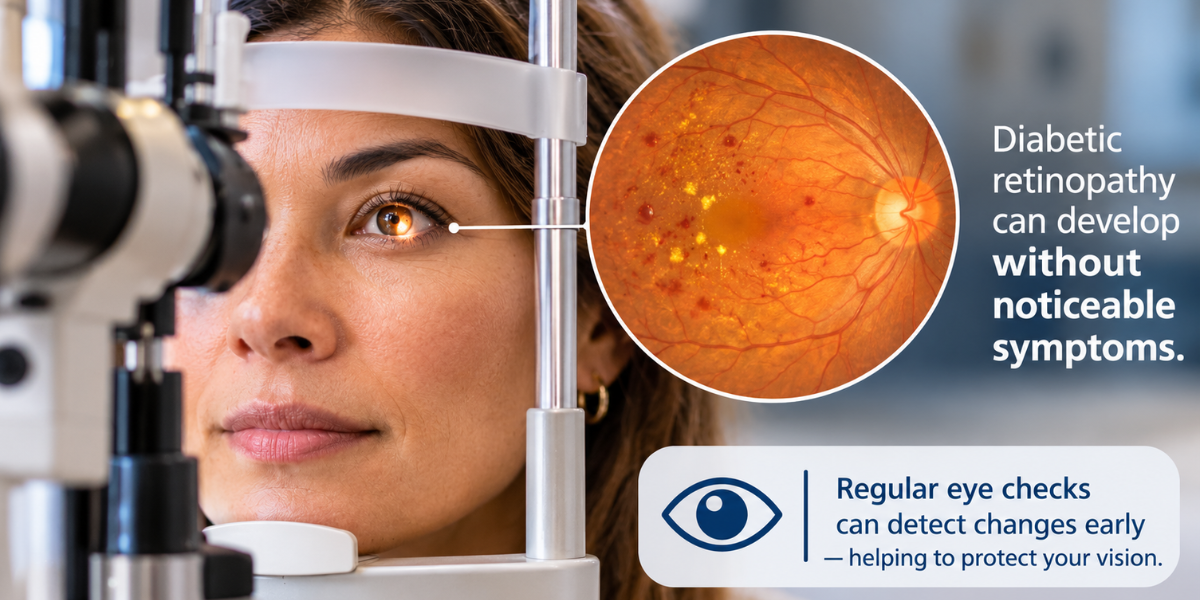

November is Diabetes-Related Eye Disease Month and a timely reminder that protecting your eyesight starts with looking after your eye health.
You might be keeping on top of your diabetes, feeling well and seeing clearly.
But did you know diabetes can cause damage to your eyes long before you notice any changes to your vision?
Diabetes can affect the small blood vessels throughout the body, including those supplying the retina, the light-sensitive tissue at the back of the eye.
Over time, this damage can lead to diabetic retinopathy, one of the most serious eye complications associated with diabetes.
And it's more common than many Australians realise.
Australian research has found that almost one in four non-Indigenous Australians with diabetes has some degree of diabetic retinopathy.
Among Aboriginal and Torres Strait Islander people aged 40 and over with diabetes, the figure rises to almost two in five.
With around 1.3 million Australians living with diabetes, these findings highlight why looking after your eye health needs to be part of managing the condition.
The danger of not knowing
One of the challenges with diabetic retinopathy is that it can develop without any noticeable symptoms in its early stages.
As the condition progresses, damaged blood vessels can leak fluid or bleed into the retina.
In some cases, this can lead to diabetic macular oedema, where fluid builds up in the macula, which is the part of the retina responsible for sharp central vision.
Without timely detection and treatment, diabetic eye disease can cause permanent vision loss and, in severe cases, blindness.
An eye check could make all the difference
Regular, comprehensive eye examinations with your trusted optometrist can help identify early signs of diabetic eye disease, often before you notice any changes to your sight.
Depending on your individual circumstances, your optometrist may examine your retina, take retinal photographs, and use other tests to assess your eye health.
If they detect changes, they can recommend appropriate monitoring, treatment or referral to an ophthalmologist.
Most people with diabetes should have an eye exam at diagnosis and at least every two years after that, unless their optometrist recommends otherwise.
Some people, including those at higher risk or with existing eye disease, may need more frequent checks.
Your overall health also plays a role in protecting your eyesight.
Working with your healthcare team to manage blood glucose levels, blood pressure and cholesterol can help reduce the risk of diabetic eye complications.
Don't wait for your vision to change
Whether you've recently been diagnosed with diabetes or have been living with it for many years, regular eye examinations are an important part of your ongoing health care.
Even if your vision seems perfectly fine, don't assume your eyes are unaffected.
Make an appointment with your optometrist and ask when your next diabetes-related eye health check is due. Your eyesight is worth looking after.