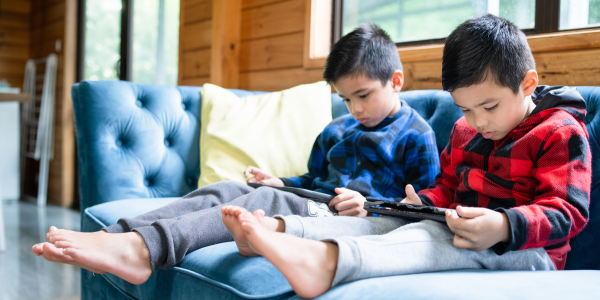

Screens aren’t going anywhere. Homework is online. Entertainment is online. Even socialising is online. For today’s kids, digital life is just life.
But here’s the thing: kid’s eyes are still developing.
And the way they use screens now can shape their vision for years to come.
If you’re raising kids in a screen-heavy world (which, let’s be real, is all of us), eye care needs to be part of the routine, not an afterthought.
Why kids’ eyes are more vulnerable than adults’
Children’s eyes are still growing. That means they’re more sensitive to visual stress, close-up work and extended periods of screen use.
Unlike adults, kids often don’t realise when their vision is reduced. They’ll keep pushing through blurry text, eye strain or headaches without saying a word.
And because so much learning now happens on screens, vision issues can quietly impact in the following areas:
- Reading and concentration
- Behaviour and attention
- Confidence at school
- Overall wellbeing
The rise of digital eye strain in kids
Long stretches of screen time can lead to digital eye strain.
That might look like:
- Tired or sore eyes
- Headaches
- Blurry vision
- Rubbing eyes constantly
- Losing focus faster
Kids also blink less when using screens, which can make their eyes feel dry and irritated.
And because devices are usually held closer than books, the eyes work even harder.
Myopia (short-sightedness) is increasing
Globally, myopia in children is on the rise, and increased screen use, combined with less outdoor time, is a key factor.
When kids spend most of their day on close-up tasks (like using tablets, phones and laptops), their eyes adapt to near vision. Over time, this can increase the risk of developing myopia.
The earlier a child becomes short-sighted, the more likely they are to develop it further as they grow.
And higher levels of myopia aren’t just inconvenient; they’re linked to increased risk of serious eye conditions later in life, including:
- Retinal detachment
- Myopic macular degeneration
- Glaucoma
- Cataracts
So, this isn’t just a “they’ll get glasses and be fine” situation.
It’s a lifelong conversation about eye health.
That’s why early habits matter. A lot.
Simple habits that protect kids’ eyes
Good eye care doesn’t mean banning screens. It’s about balance.
Follow the 20-20-20 rule
Every 20 minutes, get your child to look at something 20 feet away for at least 20 seconds.
It gives their eyes a much-needed reset.
Make it a game. Set a timer. Call it a “vision break”.
Prioritise outdoor time
Time outside isn’t just good for energy levels; it’s protective for eye development.
Aim for at least two hours of sun-smart outdoor time per day, where possible. Natural light and looking far away into the distance help support healthy vision growth.
Set up screens properly
Small tweaks make a big difference:
- Screen at arm’s length
- Slightly below eye level
- Good lighting (not in a dark room)
- Text size large enough to read comfortably
If your child is squinting, leaning in or tilting their head, that’s a red flag and an indication to see their trusted optometrist.
Build screen breaks into the day (not just hours after use)
Regular breaks reduce eye strain and help kids refocus more easily when they return to their tasks. This is especially important during homework and gaming sessions.
The silent signs of vision problems
Kids rarely say, “I can’t see properly.”
Instead, the signs are subtle.
Watch for:
- Sitting very close to screens
- Squinting or covering one eye
- Complaining of headaches
- Avoiding reading
- Losing their place while reading
- Behaviour changes or frustration with schoolwork
These can easily be mistaken for attention or learning issues when vision might be the real factor.
Don’t rely on school screenings alone
School vision checks are helpful, but they’re not a substitute for a comprehensive eye examination.
An optometrist can detect issues that basic screenings may miss, including early myopia, eye coordination problems and focusing issues.
For school-aged children, regular eye examinations each year are essential and recommended even if they’re not complaining about their vision.
Future-proofing your child’s vision
We can’t remove screens from modern childhood. But we can teach kids how to use them in healthier ways.
Think of eye care like dental care.
Daily habits + annual eye exam with a trusted optometrist = long-term protection.
By encouraging outdoor play, building in screen breaks and keeping up with eye examinations, you’re not just protecting their eyesight now.
You’re supporting their learning, development and confidence for the future.
Need to find an optometrist near you? Use our Find an optometrist tool to book your child’s next eye exam today.