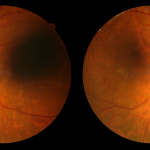
You probably already know high cholesterol can spell trouble for your heart but did you know it can also show up in your eyes?
This Cholesterol Awareness Week (24-30 November), we’re looking beyond the heart and shining a light on how your cholesterol levels could quietly be affecting your vision.
Because when it comes to health, everything’s connected and your eyes often tell the story early.
Cholesterol 101 (the short version)
Cholesterol isn’t all bad. In fact, your body needs it. It helps build cells and make hormones. The issue starts when there’s too much of the wrong kind floating around in your blood.
- LDL (low-density lipoprotein) = “bad” cholesterol that clogs arteries
- HDL (high-density lipoprotein) = “good” cholesterol that helps clear it out
When LDL builds up, fatty deposits (plaques) form inside blood vessels, narrowing them and restricting blood flow. That’s what can lead to heart attacks and strokes, and it can also mess with the tiny, delicate blood vessels in your eyes.
How high cholesterol affects your eyes
Your eyes are full of fine blood vessels that rely on healthy circulation to maintain sharp vision. When cholesterol throws off that that balance, several findings and conditions are more likely:
- Retinal artery or vein occlusion (a "stroke” in the eye)
High cholesterol contributes to increased risk of retinal artery or vein occlusions, which are often described as a "stroke in the eye". Like a stroke, blocked vessels suddenly starve tissue of oxygen, causing sudden, painless vision loss of blurring. An urgent medical problem that needs immediate assessment.
- Corneal arcus (the cholesterol ring)
A grey or white ring at the edge of the cornea is called corneal arcus - it's caused by cholesterol deposits in the peripheral cornea. It's common and usually benign with ageing, but it can be associated with abnormal blood lipids. When your optometrist sees this, they might advise you to see your GP for a blood test.
- Xanthelasma (yellow bumps around the eyes)
These bumps are soft, yellowish patches near your eyelids. They are often benign but may be a sign of cholesterol abnormalities. When your optometrist notices these patches, they will recommend a trip to the GP for a blood test. 4. Cholesterol emboli in the retina (Hollenhorst plaques)
These appear as tiny reflective cholesterol crystals lodged in retinal arteries when looking at your retina. They can indicate a higher risk of stroke and should trigger urgent referral for medical assessment.
Why your optometrist might spot it first
Here’s the cool bit: your optometrist can see your blood vessels during a comprehensive eye exam. That’s why an eye test can sometimes be the first hint that there is a cholesterol problem.
Optometrists use specialised equipment to look at your eye in fine detail. With their training and experience, they can spot these subtle changes, and they'll refer you to your GP when something is off. So, if you haven’t had your eyes tested in the past two years, Cholesterol Awareness Week is a great reminder to book in.
Protect your eyes (and your heart) from cholesterol damage
The good news? Cholesterol’s one of those things you can do something about.
Here’s how to keep both your heart and your eyes healthy:
- Eat smart by focusing on foods such as vegetables, fruit, whole grains and healthy fats (olive oil, nuts, seeds and avocado). Try to replace saturated fats with unsaturated fats that help lower LDL, like oats, beans, nuts, olive oil and avocado.
- Move your body more to support healthier cholesterol profiles and overall cardiovascular health (even a brisk walk each day can help).Stop smoking as smoking lowers your good cholesterol and harms circulation. Team care with your GP and optometrist. Keep up your regular health checks and eye e
- xaminations; they work hand in hand.
Your takeaway this Cholesterol Awareness Week
High cholesterol rarely has noticeable symptoms, but your eyes may be the first to show signs. If your optometrist recommends a trip to the GP, don’t dismiss it. It could be the nudge that protects more than just your vision.
Aussies can find their local trusted optometrist by using our easy search tool here.